The Ultimate Guide: What is the Difference Between Swing and Sliding Gates?
When it comes to securing a commercial facility or a residential property, the first line of defense is often the most critical. Property owners, architects, and security professionals frequently find themselves wrestling with a foundational access control question: what is the exact difference between swing and sliding gates? While the core objective of both configurations is to regulate entry and protect perimeters, their mechanical operation, spatial requirements, aesthetic appeal, and long-term maintenance profiles differ drastically.
Choosing the incorrect gate mechanism can lead to frequent mechanical failures, frustrating access bottlenecks, compromised perimeter security, and heavily inflated maintenance budgets. In the comprehensive world of gates & barriers, understanding the nuanced differences between swing and sliding systems is paramount.
Understanding the Basics of Modern Gates & Barriers
Before diving into the direct comparison, it is essential to contextualize the role that these structures play in modern access control. Historically, gates were simple physical barricades manually operated to keep livestock in or trespassers out. Today, automated gates & barriers are highly sophisticated electromechanical systems. They are integrated with digital keypads, biometric scanners, radio frequency identification (RFID) readers, and advanced photo-eye safety sensors.
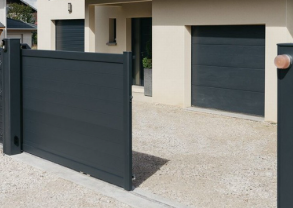
The primary division in the automated gate industry lies in the path of motion. Swing gates operate on a pivot point, moving in an arc much like a traditional front door. Sliding gates, conversely, operate on a linear plane, moving parallel to the fence line.
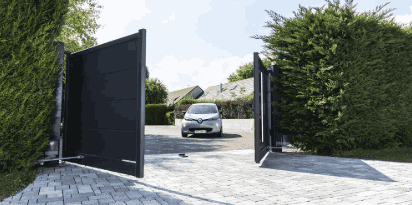
Swing Gates
Operate on a pivot point, moving in an arc like a traditional front door.
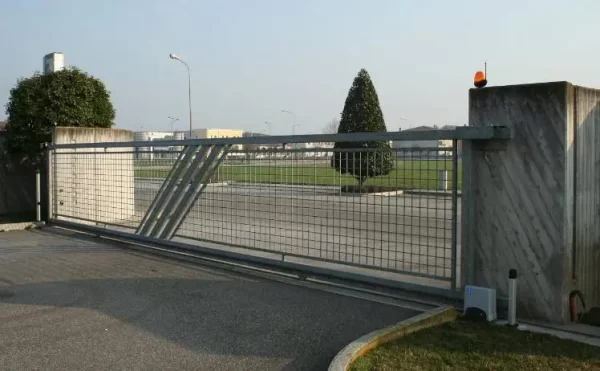
Sliding Gates
Operate on a linear plane, moving parallel to the fence line.
Swing Gates: Mechanics, Pros, and Cons
How Swing Gates Operate
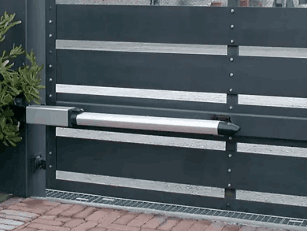
A swing gate relies on a series of heavy-duty hinges attached to a robust pillar or structural post. These gates can be configured as a single swing (one large leaf that sweeps across the entire driveway) or a dual/bi-parting swing (two smaller leaves that meet in the center). To automate a swing gate, installers typically use one of three motor types: linear actuators (ram motors) that push and pull the gate, articulated arm motors that use a hinged arm to sweep the gate open, or underground motors buried beneath the hinge point for a completely invisible, premium aesthetic.
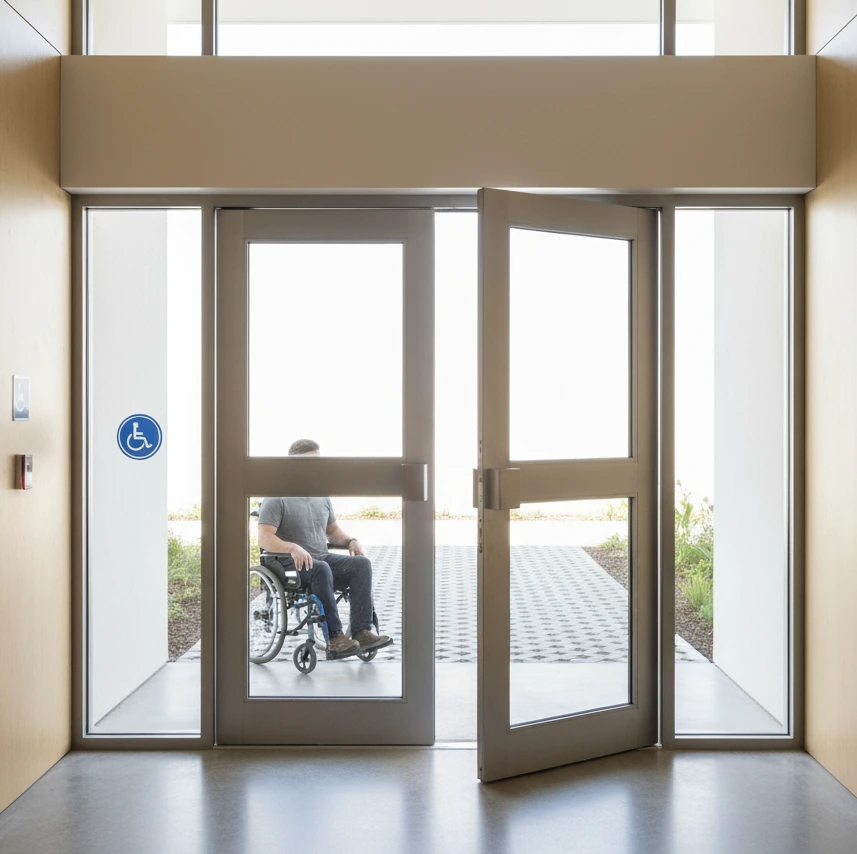
The Advantages of Swing Gates
Swing mechanisms remain incredibly popular, particularly in residential and luxury markets, due to several distinct benefits inherent to their design.
Superior Aesthetic Appeal
Swing gates offer a classic, welcoming, and elegant entrance. They evoke a sense of grandeur and are highly favored for luxury estates, historical properties, and high-end residential developments.
Quieter Operation
Because swing gates simply pivot on greased hinges and do not roll across a metal track, their operation is notably quieter than their sliding counterparts. This is a critical factor for residential properties located in noise-sensitive neighborhoods.
Fewer Ground Obstructions
Swing gates do not require a ground track spanning the driveway. This means there is no track to become clogged with dirt, snow, ice, or gravel, making them advantageous in regions with harsh winter weather or unpaved driveways.
Cost-Effective Installation
Generally speaking, the physical installation of a standard swing gate requires less foundational ground work and concrete pouring than a tracked sliding gate, potentially lowering initial installation costs.
Sliding Gates: Mechanics, Pros, and Cons
How Sliding Gates Operate
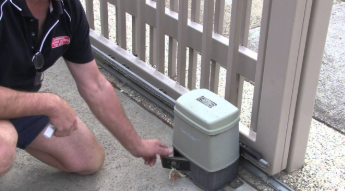
Sliding gates operate laterally. Instead of swinging outward or inward, they roll to the left or right, tucking neatly behind the adjacent fence line. Sliding gates are automated using a rack-and-pinion motor, where a motorized cog engages with a toothed rack attached to the gate. ZOD’s sliding gate motor range covers three tiers: residential systems, commercial & light industrial systems, and heavy industrial systems, all with weather protection and thermal protection.
The Advantages of Sliding Gates
Sliding configurations are the undeniable champions of the commercial sector, industrial facilities, and space-restricted residential urban properties.
Maximum Space Efficiency
Sliding gates require zero outward or inward sweep clearance. Vehicles can pull up mere inches from the gate while waiting for it to open. This makes them ideal for short driveways or properties located closely to busy main roads.
Topographical Adaptability
Because they slide sideways, sliding gates are completely unaffected by upward-sloping driveways. They can easily secure an entrance built on a steep hill where a swing gate would be impossible to operate.
Enhanced Perimeter Security
Sliding gates are exceptionally difficult to force open. When seated into their catching posts, they are highly resistant to vehicular ramming. The rack-and-pinion motor also serves as an immovable lock, making them a staple in high-security gates & barriers deployments.
Wind Resistance
Unlike swing gates, sliding gates move perpendicular to the force of the wind. A solid, heavy-duty sliding gate will not put excess strain on its motor during severe storms, making them superior for coastal or high-wind environments.
Swing vs. Sliding Gates: Analyzing the Core Differences
To truly understand what is the difference between swing and sliding gates, we must compare them head-to-head across four critical operational categories: space, security, automation technology, and long-term maintenance.
| Category | Swing Gate | Sliding Gate |
|---|---|---|
| Space Needed | Depth (sweeping arc clearance) | Width (lateral fence line) |
| Max Gate Width | Up to 3.5m (electromechanical) / 10m (hydraulic) | No fixed width limit (motor-dependent) |
| Max Gate Weight | Up to 800kg (electromechanical) / 1,200kg (hydraulic) | Up to 600kg (residential) / 1,850kg (commercial) / 4,000kg (heavy industrial) |
| Power Supply | 24V DC or 230V AC / 230V AC (hydraulic) | 24V DC / 230V AC / 230–400V AC (3-phase) |
| Security | Vulnerable at center latch (bi-parting) | Superior crash resistance |
| Motor Setup | Two motors required for dual/bi-parting gates | Single motor unit |
| Noise Level | Quieter operation | Metal-on-metal friction (rack-and-pinion) |
| Slope Compatibility | Limited on steep inclines | Completely unaffected by slope |
| Weather Protection | IP44–IP67 (underground) | IP54–IP55 |
| Safety Standards | EN 12445, EN 12453, CE certified | EN 12445, EN 12453, CE certified |
| Track Maintenance | No ground track required | Regular track clearing needed (V-track); none for cantilever |
Final Thoughts on Selecting Gates & Barriers
Ultimately, the difference between swing and sliding gates transcends mere aesthetics; it is a complex interplay of physics, spatial geometry, and security engineering. Swing gates offer unparalleled elegance, quiet operation, and lower ground maintenance, making them the crown jewels of residential estates. Sliding gates deliver unmatched space efficiency, superior security against forced entry, and topographical flexibility, cementing their status as the backbone of commercial perimeter defense.
By carefully evaluating your property’s specific dimensions, analyzing the local climate, and understanding your primary access control goals, you can navigate the expansive market of gates & barriers with confidence.
FAQs
Swing gates operate on a pivot point, moving in an arc like a traditional door. Sliding gates move laterally on a linear plane, parallel to the fence line. Swing gates require depth clearance; sliding gates require lateral fence space.
Sliding gates are the correct choice for steep driveways. Swing gates cannot open upward on a steep incline — the gate leaf will bottom out against the pavement. Sliding gates move sideways and are completely unaffected by slope.
Yes, generally. Sliding gates offer superior crash resistance. A heavy steel cantilever gate nested in a receiver post distributes ramming force more effectively than swing gate hinges. Bi-parting swing gates also have a structural vulnerability at the center latch.
It depends on the type. Swing gates require periodic hinge greasing and motor arm calibration. V-track sliding gates demand regular track clearing of debris, leaves, and snow. Cantilever sliding gates eliminate ground-track maintenance entirely.
To install a sliding gate, you need at least the full width of the driveway opening in lateral fence space to the left or right. For a cantilever system, add approximately 20% extra for the counterbalance overhang.
Ready to Choose the Right Gate for Your Property?
Get expert advice from Lebanon’s leading gate specialists. We’ll help you find the perfect swing or sliding gate system for your space, security needs, and budget.